Category Archives: black art
The time is always now. Artists reframe the black figure – National Portrait Gallery, Londen, Engeland
My Oma. Kunstinstituut Melly. Rotterdam
My Oma is een tentoonstellingsproject dat zich richt op de figuur van de grootmoeder.
Het project verkent persoonlijke en culturele erfenissen die voorkomen uit zowel genegenheid als conflict. Het brengt kunstenaars en verhalen samen, evenals kunstwerken en theorie die centrale kwesties van onze tijd verwoorden: ervaringen van immigratie, dissonant erfgoed en veranderende genderrollen.
My Oma besteedt speciale aandacht aan belichaamde kennis en verhalen op kleine schaal. In het licht van een ontwikkelende politieke polarisatie, benadrukt My Oma juist historische perspectieven, versterkte intergenerationele banden en vieren we kennis behouden door verschillende diasporas. De tweetalige titel van het project—met het Engelse my en het Nederlandse oma—is bedoeld om deze persoonlijke benadering over te brengen.
What it is, what it means and what I would like it to be. Pris Roos. Tent Rotterdam
Als ik even binnenstap bij Kunstinstituut Melly, geeft de kassier aan dat ik even op de website moet kijken. En dan blijkt dat ik vergeten was dat er een expo van Pris Roos in Rotterdam is. Jaiks. En wel in Tent, het platform voor hedendaagse kunst in de Witte de Withstraat. Het zijn mixed-media installaties met portretten van negen individuen. De geportretteerden ontvouwen hun gelaagde reis door middel van gesprekken met de kunstenaar, vastgelegd in audiofragmenten. Met de solotentoonstelling ‘what it is, what it means and what i would like it to be’ creëert Roos een ruimte waarin je je eigen familiegevoel kunt onderzoeken en je thuis kunt voelen.
De geportretteerde vrouwen en non-binaire personen, allen vertrouwde gezichten uit Roos’ eigen kring, dienen als muzen voor deze bijzondere collectie. Familie, opgroeien, immigratie, queerness, gender en gendertransitie zijn intieme thema’s die worden verkend in gesprekken bij elke installatie.
Africa Supernova. Kunsthal KAdE, Amersfoort
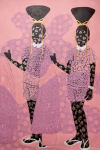 Kunsthal KAdE biedt voor de tweede keer in een paar jaar tijd uitgebreid een podium aan de opkomende generatie Afrikaanse kunstenaars. Van Benin tot Zuid-Afrika, jonge artiesten die kleurrijke werken (hence the name, supernova) neerzetten en de stereotype verwachtingen rond Afrikaanse kunst onderuit schoffelen. Deze expositie stond al een tijdje op mijn to-do-lijstje. Vanuit het crëeren van verbinding in mijn organisatie bezochten we deze expositie met een aantal collega’s. Een collega van de sectie kunst en cultuur bood ons een blik in hoe leraren leerlingen kunnen stimuleren te kijken naar de wereld om zich heen, aan de hand van kunst waarin zij zichzelf mogelijk herkennen. Erg interessant, en voor de expositie eindigt, wil ik er zeker nog een keer langs.
Nudes. LWL-Museum für Kunst und Kultur. Münster, Duitsland
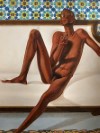 Nudes in het LWL in Münster is een expositie in samenwerking met Tate London. De expositie toont naakten door de jaren heen. Van het historisch perspectief, privé, kwetsbare en moderne naakten. De expositie raakt onderwerpen als gender, identiteit, de mannelijke blik op vrouwelijk naakt maar ook de politieke boodschap van naakten.
Een expo met 90 werken van indrukwekkende namen, Auguste Rodin, Francis Bacon, Zanele Muholi, Marlene Dumas, Pablo Picasso, Alice Neel, Tracey Emin and the Guerilla Girls uit het Tate, aangevuld met de eigen collectie van het LWL. Op de afbeelding een werk van Barkley L. Hendricks. Een aanrader om te gaan zien, deze expo.
Chapters about love, untold stories. Noni Madeleine – De passage, De Hallen, Amsterdam
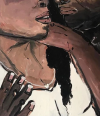
Noni Madeleine is een schilder die haar alledaagse leven en gevoels wereld verwerkt door middel van schilderen, een vorm van therapie. Haar werk is een manier om zichzelf uit te drukken, het is een manier om in contact te komen met haar roots, voorouders en daardoor met zichzelf. Ze legt momenten en herinneringen vast door middel van kunst.
” Chapters about love, untold stories.” is een serie over de liefdesverhalen en voorbeelden die ik in mijn familie heb meegekregen. Bij elk schilderij reflecteer ik op een ander liefdesverhaal. Wat is liefde? hoe voelt de liefde? En hoe handel je in naam der liefde?
The Struggle of Memory, part 1 – PalaisPopulaire, Berlijn, Duitsland
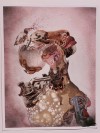 Societies require continuity and connection with the past to preserve social unity and cohesion and people need to know where they come from to be able to adjust to the circumstances of the present and challenges of the future. One of the most insidious consequences of the slave trade and European colonialism in Africa was the devaluing and dismantling of precolonial histories and cultures. The African artifacts in Western museums are symbols of the cultures that were robbed of their people and material heritage, ruthlessly subjugated, or gradually hollowed out and disassembled.
Restitution is only one step in a long journey toward the reconstruction of memory and cultural self-reinvention. Artists are taking other steps, mining family archives, highlighting individual stories, recuperating lesser-known histories, imagining different power dynamics, and constructing alternative narratives.
Met in deze expo een aantal werken van zwarte makers: Kara Walker, Wangechi Mutu, Samuel Fosso en een videoinstallatie van Lebohang Kganye. De moeite waard, vooral omdat het een plezierige expositieruimte is met een beperkte hoeveelheid ruimte. En de entree is ook nog eens gratis.
Afbeelding: Wangechi Mutu
Celébration Picasso, la collection prend des couleurs. Musée Picasso, Parijs, Frankrijk
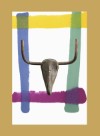 It is fifty years since Pablo Picasso died, on 8 April 1973 at Notre-Dame-de-Vie, his home in Mougins. The body of work that he left behind had a profound impact on the entire 20th century.
For this anniversary year, the Musée National Picasso-Paris has invited the British designer Sir Paul Smith, known for his work with colour, tailoring and unexpected details, to lead the artistic direction of an exceptional exhibition showcasing the museum’s collection.
This exhibition created in collaboration with Sir Paul Smith is curated around masterpieces from the collection. The designer’s unique approach to the works invites the public to view them through a contemporary lens and underlines the continuing relevance of Picasso’s work in today’s world. The visions of these two artists sometimes converge, for example around their shared love of objects, dress and playfulness, thus leading to comparisons and a spectacular, highly inventive approach to the presentation of the works.
Also on show throughout the exhibition are works by contemporary international artists. In their shared desire to open up new interpretations to Picasso’s work, Guillermo Kuitca, Obi Okigbo, Mickalene Thomas and Chéri Samba interrogate his image and putting their own slant on some of his artistic innovations.
Faith Ringgold. Musée Picasso, Parijs, Frankrijk
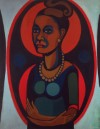 Ik kende de zwarte Amerikaanse Faith Ringgold en haar werken nog niet. Maar poeh, wat een mooie en indrukwekkende exposities was het, in het Picasso Museum in Parijs. Met schilderen, maskers en (wand)tapijten een rijke verzameling. En allemaal met een stuk historie. De moeite meer dan waard.
Zanele Muholi. Maison Européenne de la Photographie (MEP). Parijs, Frankrijk
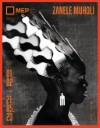 In het Stedelijk in Amsterdam zag ik eerder een expositie van Zanele Muholi maar met de achtergrond van haar leven in Zuid-Afrika wat meer op mijn netvlies dan toen, bleek de expo in het MEP in Parijs extra cachet te hebben. Schitterende fotografie, aangevuld met enkele schilderijen van Muholi’s hand vanuit coronatijd. Wow!
Basquiat x Warhol, à quatre mains. Fondation Louis Vuitton, Parijs, Frankrijk
Between 1984 and 1985, Jean-Michel Basquiat (1960-1988) and Andy Warhol (1928-1987) created around 160 paintings together in tandem, “à quatre mains”, including some of the largest works produced during their respective careers. Keith Haring (1958-1990), who witnessed their friendship and collaboration production, would go on to speak of a “conversation occurring through painting, instead of words,” and of two minds merging to create a “third distinctive and unique mind.”
“Basquiat × Warhol. Painting four hands” is the most important exhibition ever dedicated to this extraordinary body of work and brings together more than three hundred works and documents including eighty canvases jointly signed by the two artists. Also featured are individual works by each as well as a set of works by other major artists (Futura 2000, Michael Halsband, Keith Haring, Jenny Holzer, Kenny Scharf……) in order to evoke the energy of the New York downtown art scene of the 1980s.
The exhibition will open with a series of portraits of Basquiat by Warhol and of Warhol by Basquiat. It will continue with the early collaborations. These works, initiated by the two artists’ dealer, Bruno Bischofberger, benefited from a collaboration with the Italian artist, Francesco Clemente (born in 1952). After completing these 15 paintings together with Clemente, Basquiat and Warhol pursued their collaboration on an almost daily basis, with enthusiasm and complicity. The energy and force of their incessant exchanges will be the driving force of the exhibition, running through all of the galleries in the Foundation featuring highlights such as the monumental sculpture Ten Punching Bags (Last Supper) or the 8 meter canva African Mask.
Basquiat admired Warhol as an elder, a key art world personality, and the pioneer of a new language and of a groundbreaking relationship to pop culture. Warhol, in turn, found in Basquiat a renewed interest in painting. Thanks to him, he went back to painting manually on a very large scale. Warhol’s subjects (newspapers, logos of General Electric, Paramount and the Olympic Games) serve as the basis for whole series of artworks that will punctuate the exhibition.
Haufi nyana? I’ve come to take you home. Lebohang Kganye. FOAM, Amsterdam
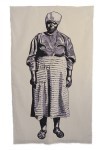 Met kunstwerken in verschillende vormen is de expositie van Lebohang Kganye divers en aantrekkelijk. Wat vooral aanspreekt zijn de zwartwitte doeken van (oude) familie van Lebohang Kganye. Fraai.
House of Bondage. Ernest Cole. FOAM. Amsterdam
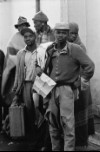 Het Zuid-Afrika voor zwarte Afrikanen tijdens het apartheidsregime in beeld gebracht, met gevaar voor eigen leven. Zo kun je de expositie van Ernest Cole wel omschrijven. Soms wil je je de ellende, waarvan je wist dat die er was maar waar je genoeg van op afstand stond, helemaal niet binnen laten komen. Maar met deze expo lukt je dat niet. Heel erg indringend zelfs.
Deconstructed bodies – in search of home. Amna Elhassan – Schirn, Frankfurt, Duitsland
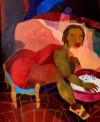 Wat een schitterende, veelzeggende expositie van Amna Elhassan. Het was eigenlijk schandalig hoe ‘terloops’ de exporuimte was: in een gang rondom onder de koepel, tussen transportkarren door om er te komen. Maar dat mocht de pret niet drukken. De werken zijn kleurrijk, representatief en vertellen hele verhalen. Een aanrader, om van deze kunstenaar werk te gaan zien.
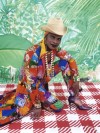
Samuel Fosso – Huis Marseille, Amsterdam
Basquiat. The Retrospective – Albertina Museum, Wenen, Oostenrijk
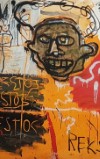
Virtually no other artist comes anywhere close to being as representative of the 1980s and that decade’s pulsating New York art scene as does the brilliantly exceptional artistic phenomenon that was Jean-Michel Basquiat. Born in New York as the son of a Haitian father and a Puerto Rican mother in 1960, he ran away from home at age 17—initially making his way as a graffiti artist and at times even living on the street. It was not long, however, before he began his rapid ascent. Basquiat’s meteoric career can seem something like fast-forwarding through a movie filled with sequences where the principal character interacts with his era’s most significant artists, including David Bowie and Madonna. Moreover, Basquiat also maintained an inspiring friendship with Andy Warhol. His paintings were soon in extremely high demand, appreciating rapidly in value—and by 1982, he had become both the youngest-ever participant in documenta 7 and the first world-famous artist with Afro-American-Caribbean roots. Basquiat was unable to withstand the challenge posed by this quick success for long, however, and he died of a drug overdose in 1988.
Basquiat’s oeuvre is more current than ever and remains every bit as pioneering and visionary as it was back then. His works turn a spotlight both on African heritage and on problematic hierarchies in society, with omnipresent racism being the theme that he found most important and personally relevant. As an eccentric outsider and an exploited superstar of his times, Basquiat now stands among contemporary art’s most significant key figures.
Het Kleurenpalet van Hedy Tjin. Meterhuis, Westergasfabriek – Amsterdam
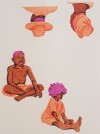 Wow, beter kan ik het niet uitdrukken! Ik vind de illustraties en tekeningen van Hedy Tjin even indrukwekkend als haar street art in de Bijlmer en de Zeeburgerdijk. En om ze dan in het echt te zien, au naturel, zoals ze ze zelf op papier heeft gezet, dan is enorm leuk. In het kleine Meterhuis springen de kleuren in alle vrolijkheid van het papier. Als je dan de onderwerpen bekijkt, dan blijken er zware thematieken onder te liggen. Haar tekeningen voor Op de rug van Bigi Kayman bijvoorbeeld, gaan over slavernij en de ontsnapping van tot slaaf gemaakten. Een erg mooie expo, die ik niet had willen missen.
Koninklijke Prijs voor de Vrije Schilderkust 2022 – Koninklijk Paleis, Amsterdam
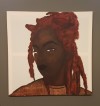 De Koninklijke prijs voor de vrije schilderkunst wordt tentoongesteld in het Koninklijk Paleis, a.k.a. het Paleis op de Dam. Voor het eerst in alle decennia dat ik in Amsterdam kom, ben ik dus in het Koninklijk Paleis. De expositie is indrukwekkend, met een flink aantal werken van zwarte artiesten of artiesten met een niet-westerse achtergrond. En dat geeft niet alleen extra dimensie, maar simpelweg ook betere representatie. Ik kom met name voor het werk Iriée Zamblé maar de andere werken zijn zeker ook de moeite waard.
Iriée Zamblé – Factor IJ, Amsterdam
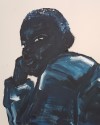 Het is een hele trek naar Factor IJ, op IJburg maar de expositie van Iriée Zamblé in het echt zien, daarvoor legde ik de afstand graag af. Er zijn een aantal werken die nog niet afgerond zijn, en dan ook nog de kunstenaar zelf die ter plekke aan het werk was. Erg leuk!
Mous Lamrabat. Blessings from Mousganistan. FOAM – Amsterdam